
The Five Limbs of the Panchang
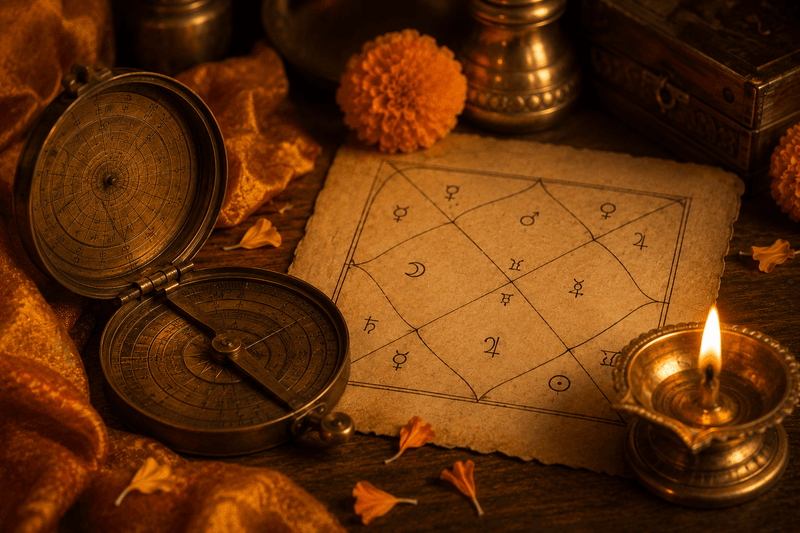
Panchang literally means "five limbs" (pancha + anga) — the five elements that together define a single day in the Hindu lunisolar calendar. Checking a date's Panchang means checking all five, not just which day of the week it is.
1. Tithi (Lunar Day)
The Tithi measures the angular distance between the Moon and Sun, split into 30 segments of 12° each across a lunar month. Unlike a solar calendar day, a Tithi doesn't have a fixed length — it can run shorter or longer than 24 hours depending on the Moon's speed, which is why a Tithi can start and end at different clock times on different dates.
2. Vaar (Weekday)
The most familiar of the five — the solar weekday, each ruled by a planet (Sunday–Saturn's day names in most Indian languages actually mirror this same Graha-to-day mapping used across many calendar traditions).
3. Nakshatra (Lunar Mansion)
The Moon's position among the 27 Nakshatras on that day, each with its own classical temperament and ruling deity. The Nakshatra active at the time of an event is central to Muhurat selection and to birth-chart interpretation alike.
4. Yoga
A calculated sum of the Sun's and Moon's longitudes, divided into 27 segments — a separate axis from both Tithi and Nakshatra, each Yoga carrying its own classical significance for what kinds of activity it favors or cautions against.
5. Karana (Half-Tithi)
Each Tithi is split into two Karanas, giving 11 possible Karanas that cycle through a lunar month (7 of them repeating, 4 appearing only once per month). Karana is traditionally the finest-grained of the five limbs, often used to fine-tune a Muhurat within a day that's otherwise favorable.
Why All Five Together
A day can look auspicious on one limb and unfavorable on another — a good Tithi during an inauspicious Yoga, for instance. That's why serious Muhurat selection (for weddings, housewarmings, and other Sanskars) checks all five limbs together rather than any single one in isolation. Our Daily Panchang computes all five for any date and location, alongside sunrise/sunset and the day's auspicious and inauspicious windows.