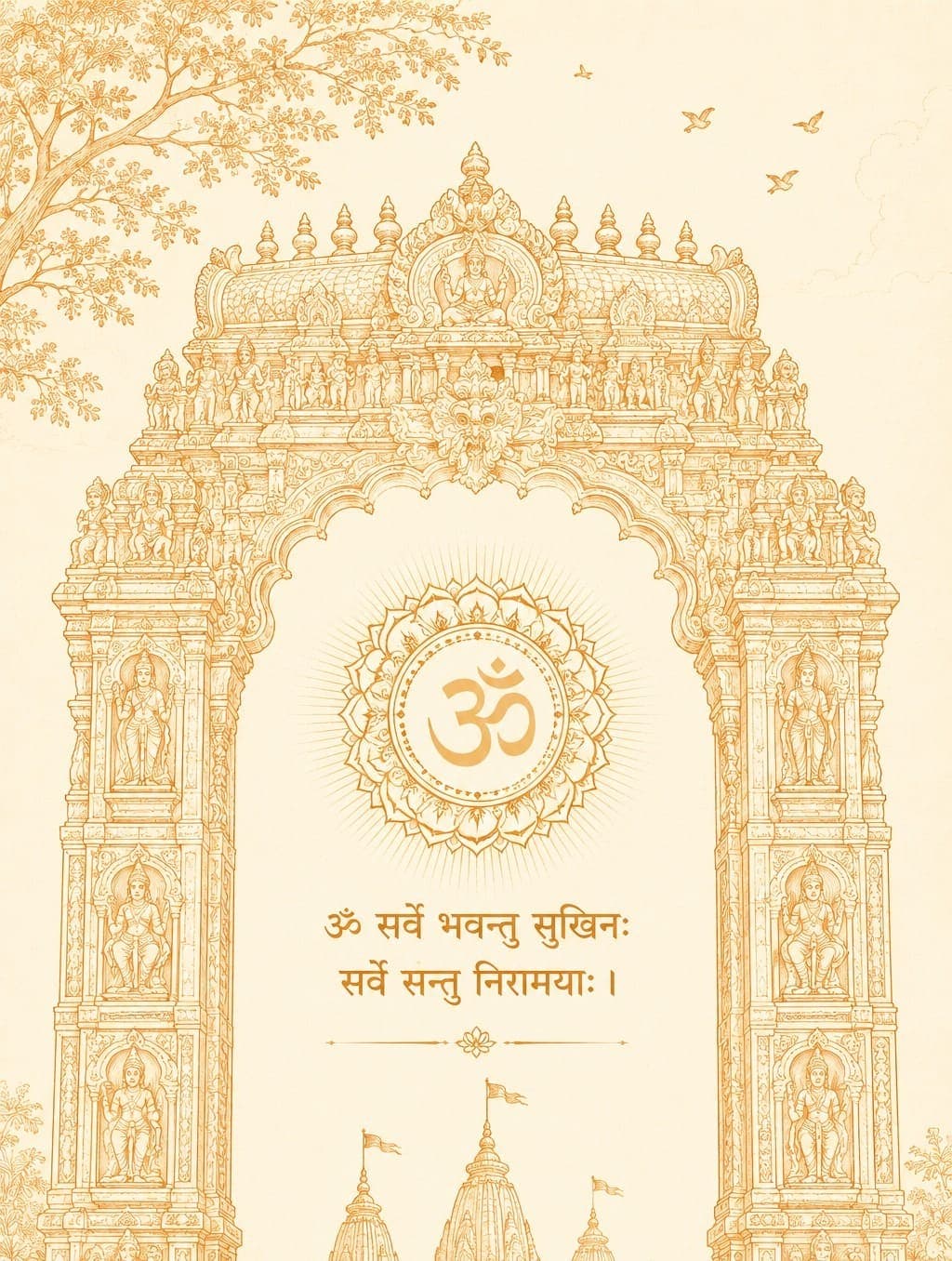
Explore the divine significance, mantras, and iconography of Puja Vidhi.
A formal declaration of intent — stating the time, place, one's name/lineage (gotra), and the specific purpose of the puja. Anchors the ritual as a deliberate act, not a rote one.
Brief meditation on the deity's form before invocation, to focus the mind.
Invocation — inviting the deity's presence into the murti, image, or a symbolic object such as a kalasha.
Offering a seat to the now-invoked deity, a gesture of hospitality.
Offering water for washing the feet and hands, and for sipping — preliminary gestures of respect found in fuller versions of the sequence.
Ritual bathing of the deity's image, often with water, milk, honey, and yogurt — an act of purification and reverence.
Offering cloth or clothing to the now-bathed deity.
Applying sandalwood paste or other fragrant substances — one of the five core sensory offerings (Pancha Upachara).
Offering flowers, often while chanting the deity's names.
Offering lit incense.
Offering a lit lamp.
Offering food, later distributed as prasad.
Waving a lit lamp before the deity in circular motions while singing devotional hymns — a culminating act of adoration.
Circumambulating the deity or shrine clockwise (keeping the deity to one's right), typically after the main worship.
Formally taking leave of the invoked deity — most visibly seen in festival contexts like Ganesh Visarjan.
Get personalized, 1-on-1 guidance beyond what any calculator can tell you.